On-Page SEO Beyond Keywords: Structure, Speed, Relevance, and Conversion Paths
Strong results come from structure, speed, relevance, and clear conversion paths—not keyword stuffing alone. Webpage Optimization helps business owners, founders, and marketing leaders in home services, real estate, medical aesthetics, and e-commerce compare options with firm decision criteria. Leads Flow Labs in Los Angeles, California supports that practical approach.
Key takeaways
- Structure pages so crawlers and users find primary intent fast.
- Speed and Core Web Vitals protect rankings and bounce rates.
- Relevance ties copy, entities, and internal links to the query.
- Conversion paths turn traffic into booked calls and sales.
What decision criteria matter most beyond keywords?
Choose pages that load quickly, mirror search intent in headings and body copy, surface proof near the offer, and route visitors to one clear next step without friction or clutter. Pair technical health with scannable hierarchy so relevance and trust support both SEO snippets and on-page action. When you need hands-on Services, map criteria to your market, then take the next step via Contact.
Which Webpage Optimization path fits your funnel?
Choose the path that matches your offer complexity, proof needs, and booking friction: simple service pages for clear local intent, richer category builds for multi-SKU catalogs, and tighter landing layouts when paid traffic demands one action. In Los Angeles, California, home services, real estate, medical aesthetics, and e-commerce teams should score speed, relevance, and conversion paths before adding more keywords.
| Option | Best for | Watch-out |
|---|---|---|
| Service page | Single offer, local intent | Thin proof blocks |
| Category hub | Multi-SKU e-commerce | Weak internal links |
| Paid landing | Ad traffic, one CTA | Slow mobile LCP |
| Location page | Multi-area coverage | Duplicate boilerplate |
Speed still decides whether relevance gets seen. Compress media, defer non-critical scripts, and protect Core Web Vitals on mobile. Relevance means copy, FAQs, and internal links mirror the query without stuffing.
Conversion paths should remove choice overload: one primary next step, trust near the ask, and form fields limited to what sales needs. Revisit templates quarterly so Webpage Optimization stays tied to revenue, not vanity rankings.
Which Webpage Optimization Levers Should You Prioritize First?
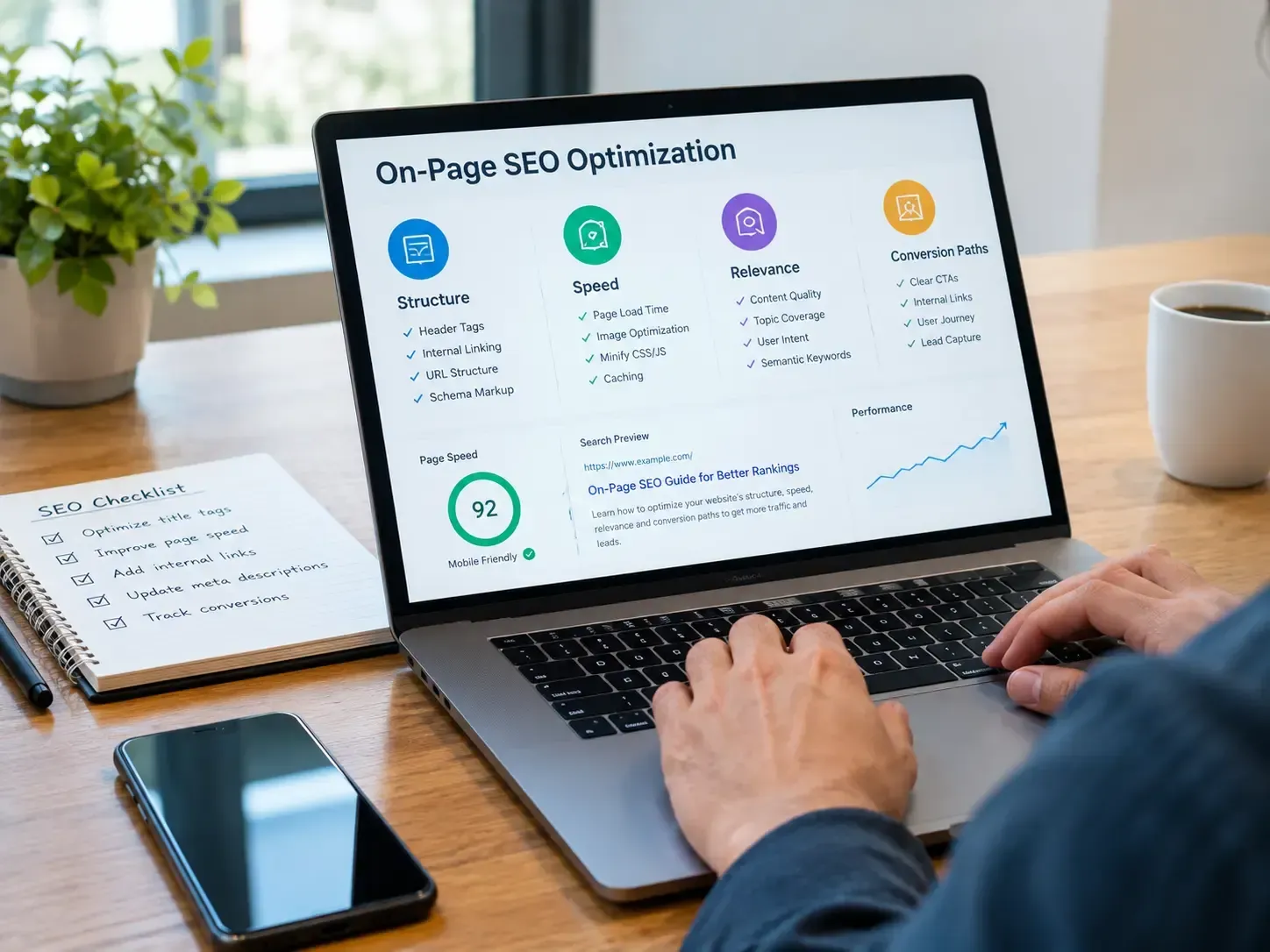
For most business owners and marketing leaders, Webpage Optimization should start with mobile speed and a single clear conversion path, then tighten heading structure and query-matched relevance so crawlers and buyers see the same primary job; keywords alone rarely fix bounce, weak proof, or booking friction in competitive local markets like Los Angeles, California.
Structure comes next: put the offer, area, and proof high, keep entities explicit, and align H2s to real tasks such as book, call, or compare packages.
Speed protects that work. Compress hero media, limit third-party tags, and watch mobile LCP so paid and organic visitors actually reach your message.
Relevance is disciplined matching service language, FAQs, and internal links that answer the query—without stuffing or duplicate location boilerplate.
Leads Flow Labs builds this into Services templates for home services, medical aesthetics, real estate, and e-commerce.
Score templates quarterly against revenue, not rankings alone. When you are ready to tighten pages and paths, Contact the team for next steps.
Why structure beats keyword stuffing
Webpage Optimization starts by making the page’s job obvious in the first screen: offer, service area, and proof, then task-based H2s that match how buyers compare options not denser keyword lists.
Clear hierarchy helps crawlers and people share one primary intent. Keep entities explicit (service, city, brand). Avoid duplicate location blocks. Align sections to book, call, or compare so relevance and scannability rise together without padding.
Speed as a ranking and revenue filter
Fast mobile delivery is non-negotiable Webpage Optimization: compress hero media, defer non-critical scripts, and limit tags so LCP stays stable when ads and organic traffic hit the same template.
Slow pages waste structure work. In competitive markets such as Los Angeles, California, founders should treat speed budgets like ad budgets—measure mobile field data, cut third-party bloat, and protect the path to the primary CTA before chasing more keywords.
Relevance without thin local copies
Relevance means query-matched language, FAQs, and internal links that answer the job, not synonym stuffing. Map each page to one primary intent and supporting questions buyers actually ask before they book.
Use service phrasing your sales team uses. Link related offers with descriptive anchors. Skip near-duplicate city pages. Disciplined matching reduces bounce and makes snippet-worthy answers easier to extract while keeping the narrative human and specific.
Conversion paths and decision criteria
One primary action, trust beside the ask, and short forms beat multi-CTA clutter. Webpage Optimization fails when proof is buried or booking friction fights the headline promise.
Keep paragraphs short and entity-specific: service, city, audience, and outcome in plain language. Descriptive internal links help related pages reinforce topical depth without stuffing the primary keyword.
When you need hands-on execution, Leads Flow Labs can align templates through Services built for founder-led teams. Ship one primary CTA per layout, watch mobile LCP and interaction delay, and drop secondary buttons that dilute booked work.
If templates or landing pages have drifted, take the next step and Contact to prioritize fixes against real funnel metrics—not vanity sessions alone.
Frequently Asked Questions
What does webpage optimization include beyond keywords?
Webpage optimization pairs structure, load speed, topical relevance, and conversion paths so crawlers and buyers share one clear job-to-be-done.
How should founders choose between relevance fixes and path fixes?
Choose relevance work when titles, headings, and copy still answer different questions than your ads or search queries.
Why does page speed matter for conversion on mobile?
Slow mobile pages raise bounce risk before the offer is read, especially when local competitors load faster above the fold. Prioritize LCP and interaction delay on templates that carry your primary CTA. Fast, stable layouts help medical aesthetics, real estate, home services, and e-commerce founders keep attention long enough for a call or short form.
Preferred Source on Google Search
Add www.leadsflowlabs.com to customize your search feed across Top Stories.