How Multi-Location Businesses Can Build Local SEO Without Duplicate Content
Multi-location firms build local search presence by giving each site unique NAP data, neighborhood proof, and service details rather than copied blocks. Leads Flow Labs guides founders and marketing leaders with Hyper-Local SEO rooted in Los Angeles, California so pages stay distinct, useful, and rank-ready across markets.
Key takeaways
- Unique location pages outperform cloned templates in local results
- Distinct NAP, photos, and neighborhood proof cut duplicate risk
- Separate Google Business Profiles support each market entity
- Original service narratives keep multi-location sites crawlable and clear
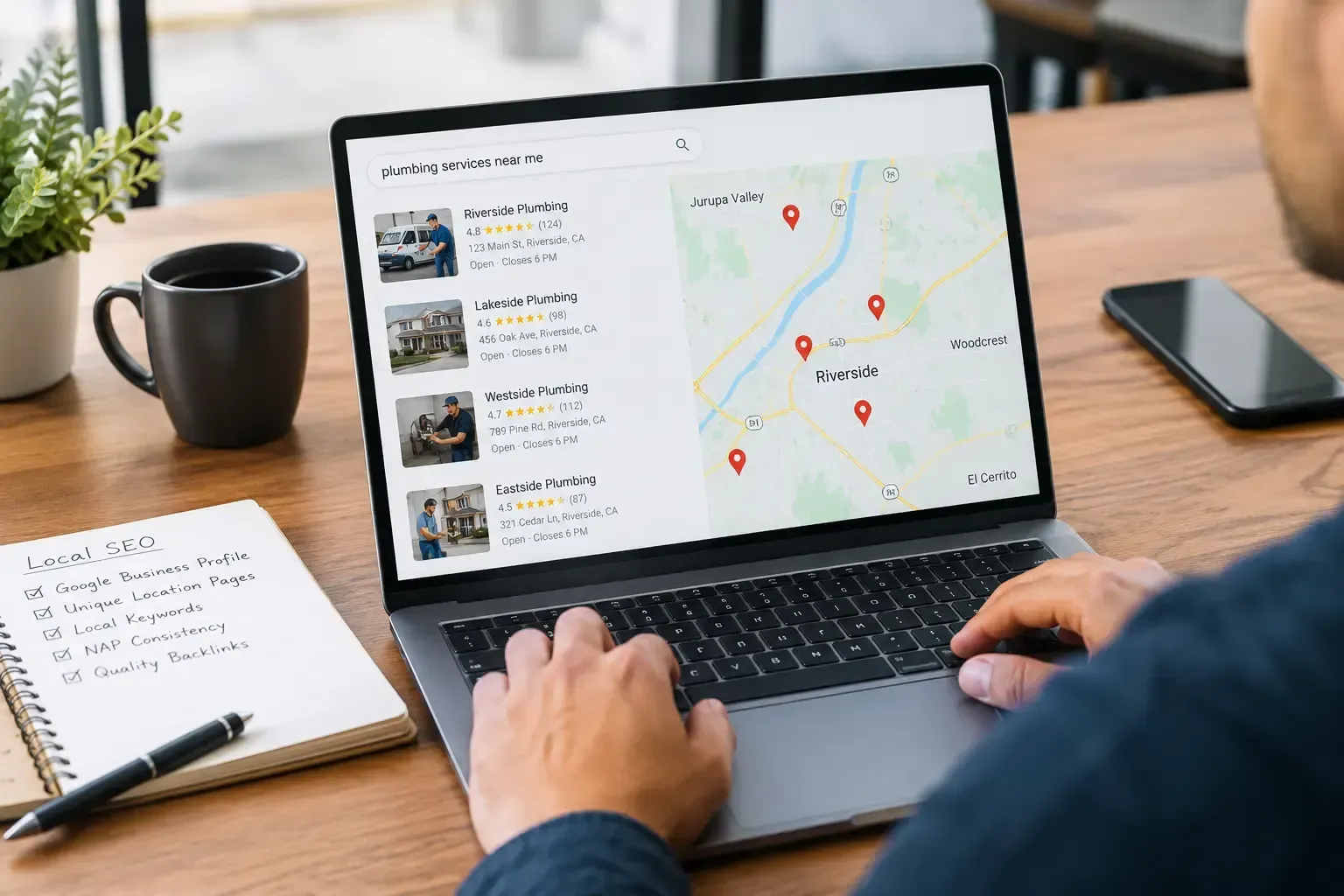
How can multi-location brands avoid duplicate local content?
They avoid duplicate content by drafting original narratives for every location, using market-specific photos and reviews, mapping unique service areas in Google Business Profiles, and publishing neighborhood case details so engines treat each page as a distinct local entity rather than a thin clone.
Which Hyper-Local SEO signals should each location page own?
Each location should own unique NAP wording, neighborhood service proof, original photos, and market-specific FAQs so Hyper-Local SEO treats branches as separate entities; shared boilerplate, identical service blocks, and cloned meta text raise duplicate risk and weaken Los Angeles, California multi-site clarity when founders scale home services, real estate, or medical aesthetics.
| Element | Best for | Watch-out |
|---|---|---|
| Unique NAP + hours | Entity match to GBP | Copy-paste footers across cities |
| Neighborhood proof | Trust in local packs | Generic city-wide claims only |
| Original photos | Visual distinctness | Stock shots reused on every URL |
| Market service notes | Query relevance | Identical package paragraphs |
Keep paragraphs short and tied to real markets. Map service radii honestly, cite nearby landmarks, and write one original outcome story per branch. The Services offering from Leads Flow Labs structures these assets without template sprawl. The About team method prioritizes crawlable difference over volume.
Which Wins for Multi-Location Hyper-Local SEO: Unique Branch Pages or Shared Templates?
Unique branch pages win for Hyper-Local SEO when each location carries its own NAP, neighborhood proof, original photos, and market notes, while shared templates only work as a thin shell; identical blocks and cloned meta still dilute entity signals for Los Angeles, California home services, real estate, and medical aesthetics operators scaling beyond one city.
Founders often start with one master layout. That saves time until Google sees the same service paragraphs on every URL.
Write each branch as a real place. Name nearby streets, landmarks, and drive-time realities instead of repeating a city-wide pitch.
Keep the design system consistent. Change the substance: hours, staff bios, parking notes, and one outcome story that could only happen at that site.
Avoid mirror hubs that only swap the city name. Those pages compete with each other and weaken local pack clarity.
Leads Flow Labs helps multi-location brands keep structure shared and proof unique so crawl paths stay clean as you add markets.
How Do You Scale NAP and Proof Without Cloning Pages?
Hyper-Local SEO for multi-location brands scales when every branch keeps identical NAP formatting, unique service copy, local photos, and market-specific FAQs, while templates only control layout; cloning paragraphs across cities confuses entities and weakens pack visibility for Los Angeles, California home services, real estate, and medical aesthetics teams.
List one primary address, phone, and hours block that matches GBP exactly. Do not invent second “marketing” versions.
Add neighborhood proof only that branch can claim: nearby streets, parking, and a short outcome story from that site.
Refresh categories and services per market so search intent stays local, not generic.
Frequently Asked Questions
Why does duplicate content hurt multi-location Hyper-Local SEO?
Duplicate blocks make branch URLs look interchangeable, so Google may pick one weak page or none for the local pack. Unique NAP, photos, and neighborhood detail strengthen each entity. Shared shells are fine; identical service paragraphs and meta across cities dilute relevance for home services, real estate, and medical aesthetics brands.
How unique must each location page be for Hyper-Local SEO?
Each page needs original body copy, real storefront and team images, accurate hours, and local proof such as streets or landmarks. Templates can share design and section order. Swap city names alone is not enough. Aim for substance only that branch could publish, especially when expanding past Los Angeles, California.
What should a multi-location home services page include?
Start with facts only that site can own: nearby neighborhoods, job conditions, parking or access, and local partners. Tie reviews and outcomes to the crew that served that address. Drop national templates so each market page stays unique and useful for founders comparing real service areas.
Preferred Source on Google Search
Add www.leadsflowlabs.com to customize your search feed across Top Stories.