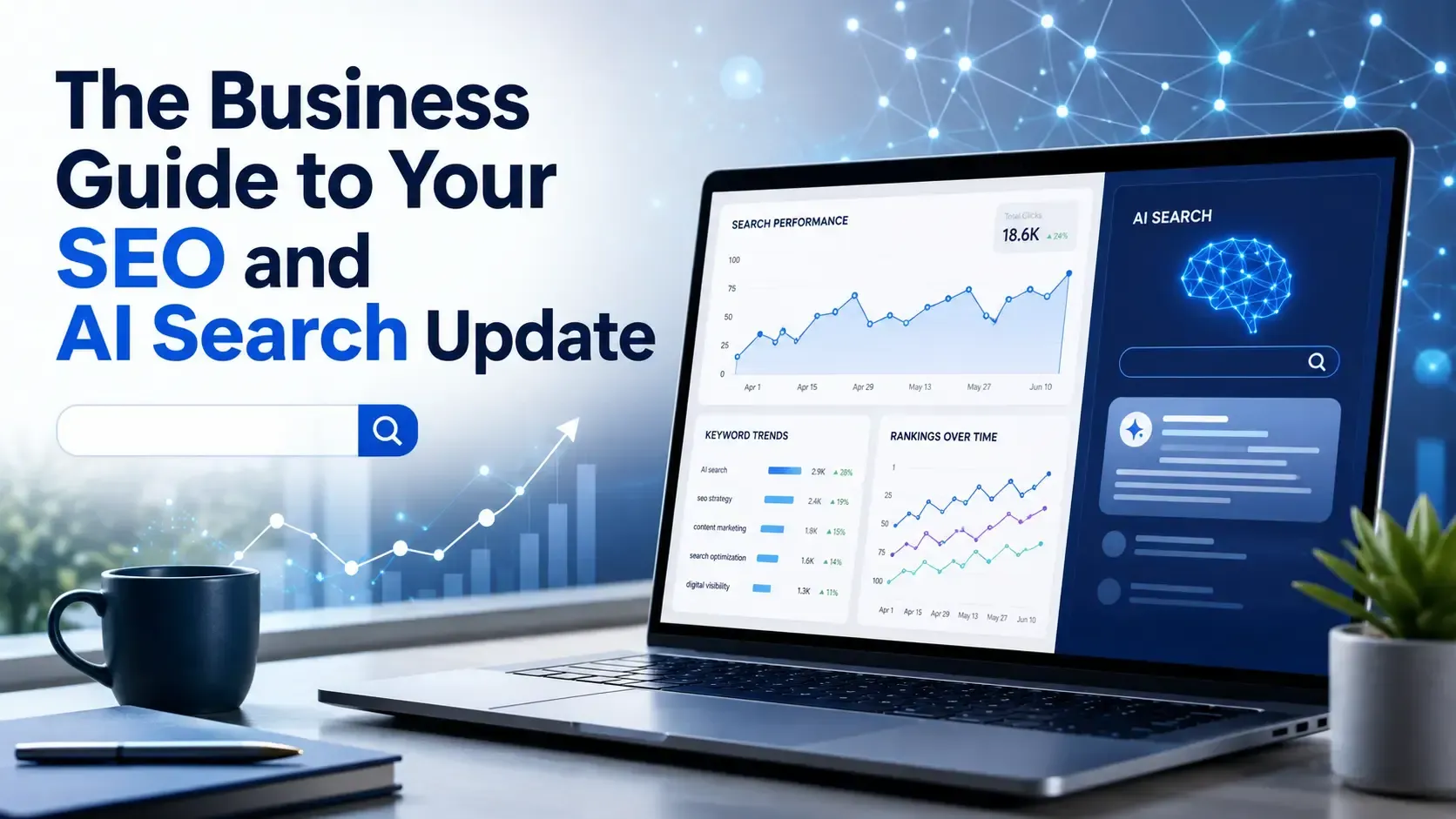
The Business Guide to Your SEO and AI Search Update
Navigating the shift from traditional search engines to AI-driven answer engines is critical for modern business survival. This guide breaks down the essential strategies to optimize your brand for platforms like ChatGPT, Claude, and Google's AI Overview. By focusing on direct answers, clean local data, and human authenticity, you can secure your digital visibility.
- Answer Engine Optimization (AEO) requires formatting content to answer user questions directly and concisely.
- Maintaining perfectly consistent local data and utilizing schema markup is vital for AI recommendations.
- Traditional SEO foundations like site speed, backlinks, and mobile optimization remain mandatory for AI visibility.
Search engines are changing rapidly. Business owners must adjust their digital strategies to stay visible. People no longer just search for links. They want immediate answers. This shift requires a whole new approach to online marketing. You can no longer rely entirely on traditional keyword stuffing. You need a strategy that embraces artificial intelligence.
The way consumers find products and services has fundamentally shifted. When a user asks a question today, they expect a complete thought in return. They do not want to click through five different websites to find a simple answer. Modern algorithms pull information from multiple sources to create a single response. This changes how companies must present their data.
To succeed, you must understand how these systems evaluate your website. High rankings require clarity, structure, and direct value. If your website is confusing, artificial intelligence will ignore it. Your goal is to become the trusted source that algorithms cite. Partnering with a dedicated agency like Leads Flow Labs can help you navigate this transition smoothly. The transition to intelligent search is permanent. Businesses that adapt will thrive. Those that resist will lose their digital footprint.
How AI Overview Changes Traditional SEO
Google has introduced massive changes to its search results. The introduction of the AI Overview feature alters the standard search layout. When a user types a query, Google now generates a direct summary at the very top of the page. This summary pushes traditional organic links further down the screen.
This update impacts website traffic directly. If a user gets their answer from the overview, they might not click your link. This is called a zero-click search. Zero-click searches are rising across all industries. However, this is not a reason to panic. It is a reason to pivot your strategy.
The AI Overview does not invent information. It pulls data from highly trusted websites. It reads the top-ranking pages and synthesizes their content. If you want your business featured in these summaries, your content must be highly authoritative. You must structure your text so that machines can read it easily. Use clear headings. Provide direct answers to common questions. Make your content highly factual and easy to verify.

Traditional SEO still matters immensely. The algorithms still rely on traditional ranking signals to determine which sites to trust. Backlinks, page speed, and mobile optimization remain critical. The overview feature simply adds a new layer of complexity. You must build a strong foundation first. Only then can you optimize for these advanced summary features.
Understanding AEO and GEO for Modern Search
The vocabulary of digital marketing is expanding. You must understand two critical concepts. These are Answer Engine Optimization (AEO) and Generative Engine Optimization (GEO). Both are vital for your future visibility.
Answer Engine Optimization focuses on providing direct answers. People increasingly use voice search and smart speakers. They ask full questions. They want concise answers. AEO involves structuring your content to answer these specific questions. FAQ sections are perfect for this. When you answer a question directly, you increase your chances of being cited as a source.
Generative Engine Optimization is slightly different. Generative models create unique responses based on vast amounts of data. GEO involves making your brand the most recognizable entity in your niche. You want the generative model to associate your business with specific topics. This requires consistent brand messaging across the entire internet. It involves publishing high-quality research, gaining mentions in major publications, and building a strong digital footprint.
Both strategies require a shift in perspective. You are no longer just writing for a human reader. You are training a machine to understand your business. For a deeper dive into this concept, consider exploring SEO beyond standard search engines. The more context you provide, the better these systems understand your value.
Comparing ChatGPT, Claude, and Perplexity
The search market is no longer a monopoly. Users are turning to dedicated platforms for their research. You must understand the distinct features of each major platform. This knowledge helps you tailor your digital presence.
ChatGPT for Broad Consumer Inquiries
ChatGPT remains the most famous conversational model. Millions of people use it daily as a search alternative. They ask for product recommendations, service comparisons, and local business suggestions. ChatGPT relies heavily on its training data. It also browses the live web for recent information.
To gain visibility here, your brand must be mentioned in prominent places. ChatGPT learns from review sites, news articles, and major directories. If your business has strong reviews and consistent online mentions, it is more likely to be recommended.
Claude for Professional and Contextual Depth
Claude is known for its nuanced understanding and large context window. Business professionals often use Claude for deep research and data analysis. It excels at summarizing long documents and comparing complex services.
If you target a business-to-business audience, Claude is crucial. Your website must feature detailed white papers, case studies, and comprehensive service breakdowns. Claude favors long-form, highly detailed content over brief blog posts. Providing thorough documentation increases your chances of being referenced in professional queries.
Perplexity as a Dedicated Research Hub
Perplexity operates directly as an answer engine. It functions like a traditional search engine but delivers synthesized answers with distinct footnotes. Users love Perplexity because it shows its sources clearly.
Getting cited by Perplexity requires excellent content structure. You must use clear data points, accurate statistics, and definitive statements. Perplexity rewards websites that offer original research. When you publish unique data, Perplexity will likely use your site as a primary footnote. If you need help structuring your data, exploring our core marketing services is a great next step.
AI Search Engine Feature Comparison
Understanding the technical differences between these platforms is vital. The table below outlines how each major platform handles search queries, data retrieval, and citation formatting.
| Search Platform | Core Functionality | Real-Time Web Browsing | Citation Style | Best For |
|---|---|---|---|---|
| Google AI Overview | Synthesizes search results at the top of the page. | Yes, integrated into live search. | Link cards below text. | Broad consumer queries. |
| ChatGPT | Conversational assistant and research tool. | Yes, via Bing integration. | Numbered links. | General assistance. |
| Claude | Deep analytical reading and drafting. | No direct live browsing. | Contextual summary. | B2B research. |
| Perplexity | Dedicated answer engine with citations. | Yes, primary function. | Direct footnotes. | Factual research. |
Upgrading Your Local Business Presence
Local businesses face a unique challenge with artificial intelligence. When a user asks an assistant for a local recommendation, the assistant relies on specific local data. If your local data is messy, you will not appear in the results.
Your Name, Address, and Phone number must be perfectly consistent everywhere. This is known as your NAP profile. For example, our headquarters is located at 4339 Clara St in Los Angeles. We ensure this exact format appears on every directory, social profile, and business listing. If one directory lists a different street abbreviation, it confuses the algorithms.
You must also heavily utilize schema markup. Schema is a specific code you add to your website. It speaks directly to search algorithms. It tells them exactly what your business does, where you are located, and what your operating hours are. This removes all guesswork for the machines. Artificial intelligence prefers certainty. Schema provides that certainty.
Furthermore, customer reviews hold more weight than ever. Generative models read reviews to understand consumer sentiment. If your reviews frequently mention your excellent customer service, the algorithms will associate your brand with good service. Encourage your satisfied clients to leave detailed reviews. Ask them to mention specific services they received. This builds a robust semantic profile for your business.
Preserving the Human Element in Content
With the rise of automation, human authenticity becomes a premium asset. Algorithms are getting better at identifying mass-produced, low-quality text. If you publish generic content, you will be penalized.
You must demonstrate true expertise. Google uses a concept called Experience, Expertise, Authoritativeness, and Trustworthiness. This is known as E-E-A-T. Your content must prove that real humans with real experience run your business.
Share personal anecdotes. Discuss real challenges your company has faced. Highlight your team members and their professional backgrounds. You can learn more about our team and how we build trust by reviewing our background. Adding real human voices to your website makes it unique. Machines cannot replicate genuine human experience.
When you publish a blog post, include the author's byline. Link the byline to a detailed author biography. Show the algorithms that a qualified expert wrote the article. This builds immense trust with both the machines and your human readers.
Technical Foundation for the Future
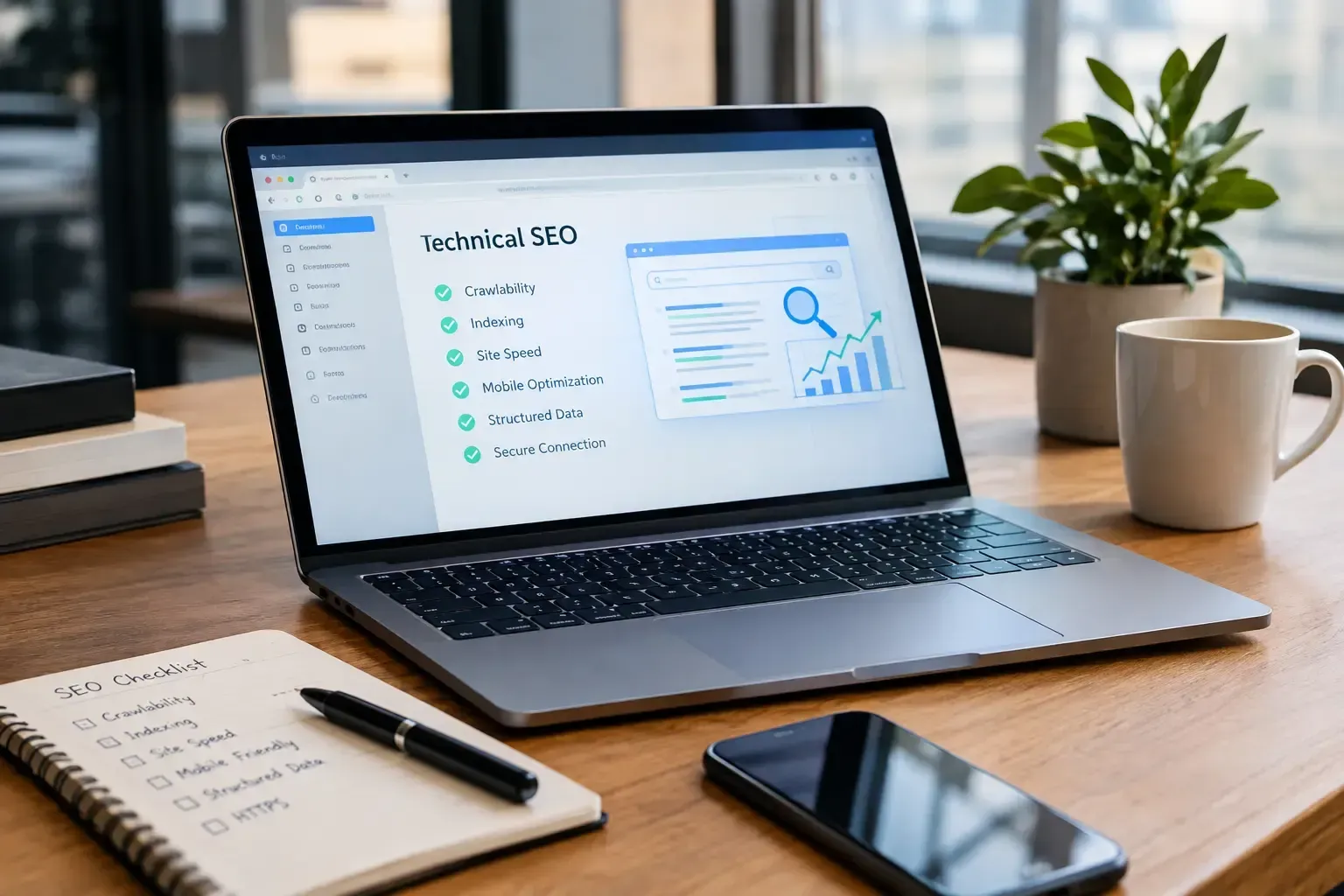
You cannot ignore technical performance. An intelligent algorithm will not wait for a slow website to load. It will simply move to the next available source. Your technical foundation must be flawless.
Ensure your website is fully responsive. Mobile browsing dominates the internet. If your site breaks on a mobile device, algorithms will lower your ranking. Optimize all your images to reduce load times. Clean up any broken links on your website.
Structure your website logically. Use clear categories and a simple navigation menu. A machine should be able to crawl your entire website in seconds. Create a comprehensive sitemap and submit it to the major search consoles. The easier you make it for machines to read your site, the better your visibility will be.
Content pruning is also necessary. Review your older articles. If an article is outdated or irrelevant, update it. If it cannot be saved, delete it and redirect the URL. Stale content drags down your overall domain authority. Keep your digital presence fresh, accurate, and highly relevant.
Tracking and Adapting Your Strategy
You cannot manage what you do not measure. You must track how users find your website. However, tracking traffic from artificial intelligence tools is currently difficult. They do not always pass traditional referral data.
You must look at broader trends. Monitor your overall organic traffic closely. Watch your branded search volume. If more people are searching for your company name directly, your brand awareness is growing. This is often a result of being recommended by a conversational assistant.
Track your impressions in search consoles. An impression occurs when your link appears on a screen, even if the user does not click it. If your impressions are rising but your clicks are stable, you might be appearing in summary overviews.
Stay flexible. The digital landscape will continue to change. New platforms will emerge. Existing platforms will update their algorithms. You must be willing to adapt your strategy continuously. Read industry news. Test new content formats. Monitor your competitors.
Artificial intelligence is not a passing trend. It is the new foundation of the internet. By embracing these changes now, you position your business for long-term success. Focus on answering user questions directly. Build a flawless technical foundation. Maintain your human authenticity. These principles will guide you through any algorithmic update.
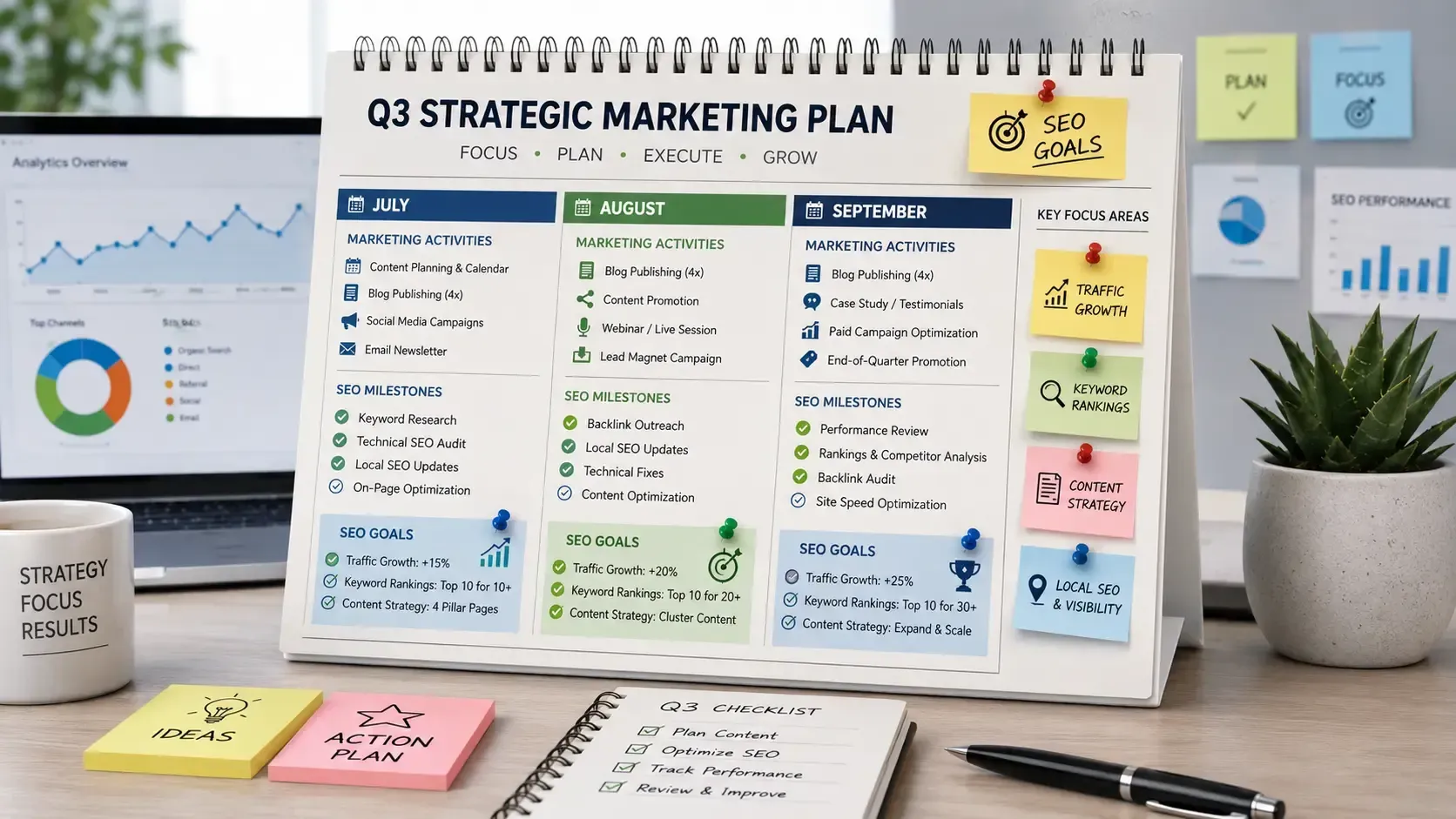
The most important step is simply getting started. Do not wait for the dust to settle. The companies that experiment today will be the industry leaders tomorrow. Take control of your digital narrative. Ensure your business data is accurate across the web. Start answering your customers' most pressing questions in clear, concise language. This proactive approach guarantees that no matter how search evolves, your business will remain visible and trusted.
Frequently Asked Questions
What is the difference between AEO and GEO?
Answer Engine Optimization (AEO) focuses on providing direct, concise answers to specific user questions, primarily to capture voice search and direct assistant queries. Generative Engine Optimization (GEO) is broader. It focuses on ensuring a brand is well-represented across the internet so that generative AI models understand the brand context and recommend it naturally in long-form responses.
How does AI search affect local businesses?
AI search engines rely heavily on accurate local data to make recommendations. If a local business has inconsistent directory listings, missing schema markup, or poor reviews, the AI will ignore them. Local businesses must prioritize perfectly consistent Name, Address, and Phone (NAP) data to ensure they appear in local AI recommendations.
Can I ignore traditional SEO if I optimize for AI?
No. Traditional SEO forms the foundation that artificial intelligence relies upon. AI tools crawl the web and look for traditional trust signals like backlinks, fast loading speeds, and secure website architecture. You must build a strong traditional technical foundation before advanced algorithms will trust your content enough to cite it.